Discover Tanzania Through Unforgettable Journeys
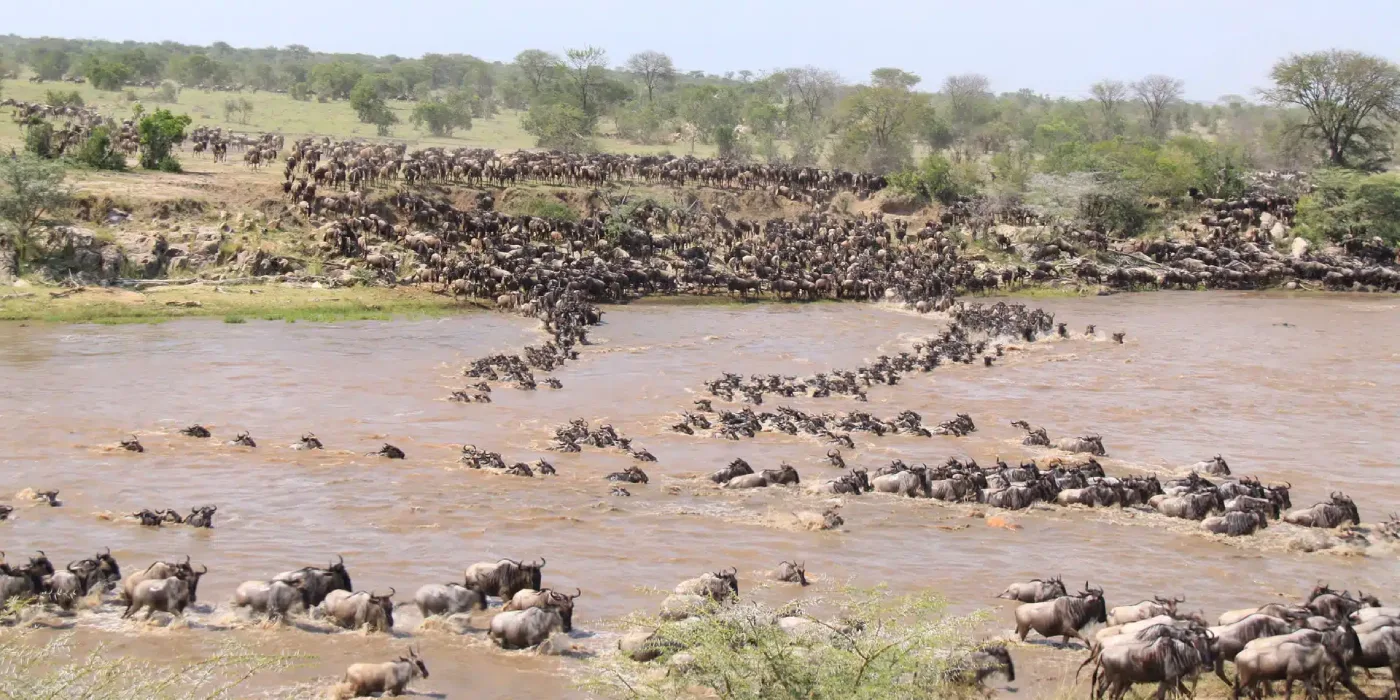
For many travelers, the most exciting phase of the Great Wildebeest Migration occurs between July and October. During these months, the massive herds move into the northern Serengeti, where they face one of the greatest challenges of their journey: crossing the Mara River.
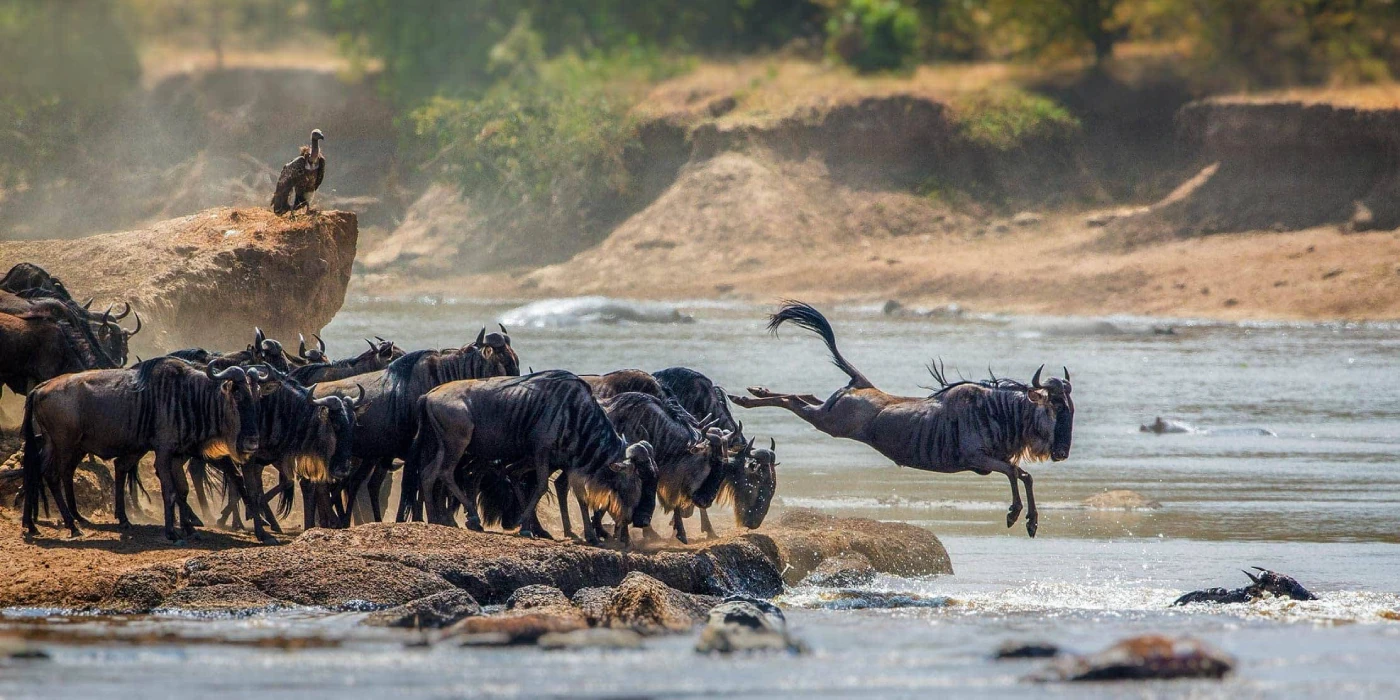
The river crossings are famous worldwide because they combine breathtaking scenery, dramatic wildlife encounters, and intense survival instincts. Thousands of wildebeest gather along the riverbanks, often waiting for hours or even days before one brave animal takes the first leap into the water.
Once the crossing begins, chaos follows. Wildebeest, zebras, and gazelles rush into the river while crocodiles wait below. Some animals successfully make it across, while others fall victim to predators or strong currents.
The Northern Serengeti, particularly the Kogatende region, is the best location to witness these unforgettable moments. Because river crossings are unpredictable, visitors should ideally spend at least three to four nights in the area to maximize their chances of seeing this natural spectacle.
As the short rains begin in November, the migration gradually leaves the northern Serengeti and starts moving southward. The herds travel through the central Serengeti before returning to the southern plains.
This period offers a different safari experience. The landscapes become greener, wildlife is more dispersed, and visitor numbers decrease significantly compared to the peak migration season.
Travelers visiting during November and December enjoy excellent game viewing without the larger crowds often associated with the Mara River crossing season.
Many safari experts consider January through March to be one of the most rewarding times to see the wildebeest migration in Tanzania.
During this period, the herds settle in the nutrient-rich grasslands of the Southern Serengeti and Ndutu region. These vast open plains provide ideal grazing conditions for pregnant wildebeest.
Between late January and February, approximately 500,000 wildebeest calves are born within a remarkably short period.
This extraordinary event attracts numerous predators, including lions, cheetahs, leopards, hyenas, and jackals. The result is an intense and fascinating wildlife experience that showcases the delicate balance between life and survival in the African wilderness.
For photographers and wildlife enthusiasts, the calving season offers exceptional opportunities to capture dramatic predator-prey interactions and adorable newborn animals.
Located between the Southern Serengeti and the Ngorongoro Conservation Area, Ndutu is the prime location for calving season safaris from December through March.
The Seronera region is often referred to as the heart of the Serengeti. It provides excellent year-round wildlife viewing and serves as an important migration corridor during April, May, November, and December.
The Western Corridor becomes particularly active from May through July as the migration moves toward the Grumeti River.
The Northern Serengeti is famous for its dramatic Mara River crossings from July through October. This area offers some of the most iconic migration experiences in Africa.
The answer depends on what you hope to experience.
If your dream is to witness a river crossing, August and September are generally considered the best months.
If you prefer seeing newborn animals and predator interactions, February is often the ideal time to visit.
The migration is constantly moving, which means flexibility is key.
A safari of at least four to six days is recommended if your primary goal is to witness the migration. This allows guides to position you in the best possible areas based on the current movement of the herds.
For travelers visiting specifically for the Mara River crossings, a stay of at least three nights in the Northern Serengeti is highly recommended.
One of the biggest advantages of choosing Tanzania is the ability to combine the Great Migration with other world-class destinations.
Popular combinations include:
This allows travelers to experience both incredible wildlife encounters and relaxing tropical beaches within a single itinerary.
Migration safaris are extremely popular, especially during river crossing season. Booking six to twelve months in advance is highly recommended.
Selecting the correct area of the Serengeti for your travel dates is crucial. The migration moves throughout the year, so location matters more than the month itself.
Knowledgeable local guides understand migration patterns and can significantly increase your chances of witnessing key wildlife events.
Nature is unpredictable. Flexibility with travel dates and safari routes often results in the most rewarding experiences.
Yes. The wildebeest migration is a continuous annual cycle. The location changes throughout the year, but the migration never truly stops
Nature is unpredictable. Flexibility with travel dates and safari routes often results in the most rewarding experiences.
No. River crossings are natural events and cannot be predicted with certainty. However, staying several nights in the Northern Serengeti greatly improves your chances.
In addition to more than 1.5 million wildebeest, the migration includes hundreds of thousands of zebras, gazelles, and other grazing animals.
The best time to see the wildebeest migration in Tanzania ultimately depends on the experience you are seeking. Travelers dreaming of dramatic river crossings should plan their safari between July and October in the Northern Serengeti. Those interested in witnessing thousands of newborn calves and intense predator action should visit during the calving season between January and March in the Southern Serengeti and Ndutu region.
Regardless of when you travel, the Great Wildebeest Migration remains one of the most remarkable wildlife spectacles on Earth. From endless plains filled with grazing herds to heart-stopping river crossings and unforgettable predator encounters, Tanzania offers an extraordinary safari experience that leaves lasting memories for a lifetime.

Don't just get there, get there in style.
Top Destination
Information
Follow Us
Payment channels